
Now Booking Private Pay Clients - All Others Coming Soon | Monthly Info Sessions and Q&A: Register Today!

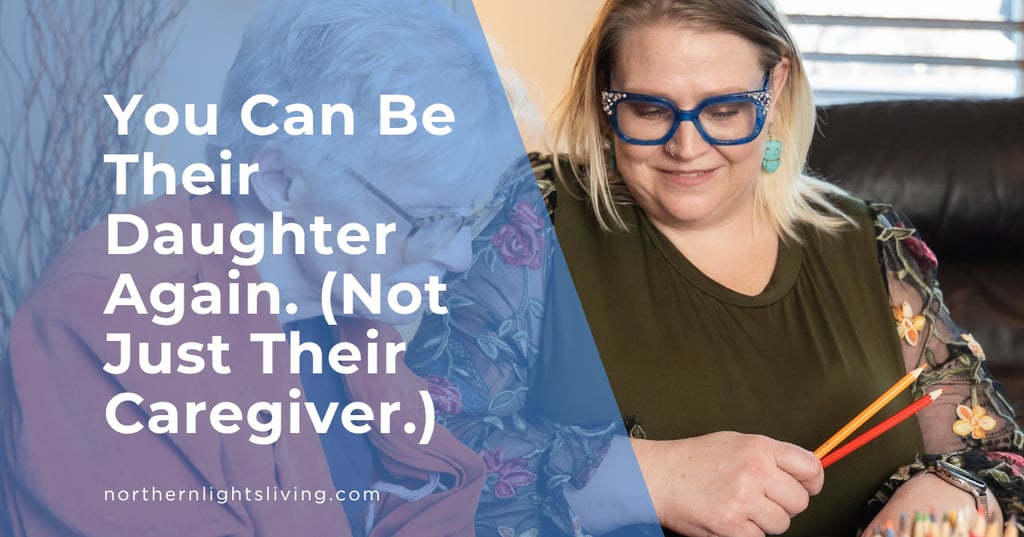
You Can Be Their Daughter Again. (Not Just Their Caregiver.)
When caregiving takes over, you stop showing up as a son, daughter, or spouse. In-home support can give your relationship back to you.
Stephanie Alexander, Founder Northern Lights Living
6/15/20264 min read
You know that moment when you realize the last ten conversations you had with your mom were about her medications, her appointments, whether she ate, whether she showered?
That's when it hits you. You're not showing up as her kid anymore. You're showing up as her caregiver. And somewhere in that shift, the relationship you once had... started to disappear.
Nobody warned you this would happen, or told you that caregiving doesn't just wear you out. It changes who you are to each other.
The adult child who used to just be with their parent enjoying quality time together now manages every detail of their daily life. The spouse who used to be a partner who enjoyed slow conversation over dinner is now a full-time care coordinator. And even when both people love each other deeply, that dynamic takes a toll. Resentment builds. Guilt becomes a constant low hum. Everybody's nervous systems are on alert, and it never stops.
Right?
What shifts when support shares the load
In-home caregiving support doesn't replace family.
It's there so family can just be family to each other, again.
When a caregiver comes in to handle meals, personal care, household tasks, companionship... an opening occurs. The adult child isn't the only person holding everything together anymore. The pressure eases and suddenly there's space to just sit together. To talk about something other than logistics. To remember what the relationship actually feels like.
That's the goal. More relationship time and less task time.
I've watched this happen over and over. Families who were running on empty, short with each other, barely keeping it together, getting their person the support they needed, and finding each other again in the process. That matters so much and it’s why I started Northern Lights Living in the first place.
Stress changes how we talk to the people we love most
When everyone is stretched thin, small things escalate. Misunderstandings grow. Patience wears down. Everybody gets less patient with each other, feelings get hurt, and then everybody feels terrible about it.
In-home support reduces that tension by taking some pressure off the whole household. When someone's basic needs are being met consistently, when there's a routine that holds steady, everything about the environment can start to settle and aging in place can feel not only possible but doable.
Families notice that conversations feel easier. That there's less conflict about what needs to happen, because it's already being handled as part of a normal routine. They’ve finally been able to exit survival mode.
Getting to show up as yourself again
One of the gifts that in-home support can give a family is this: family members get to stop being the project manager.
Not the medication tracker. Not the person who's always on.
The daughter. The son. The spouse. The partner.
This is worth repeating to yourself, if you’ve been feeling hesitation: Asking for support is not a failure of love. I say this so often, because I know a lot of families often carry that belief without even realizing it.
Getting the support you need actually protects your relationship and everyone’s independence. It's how you maintain a close, loving relationship, even as things change.
Conversation starters that actually help
If you're trying to have this conversation with someone you love, here are some ways to open the door without triggering every defense they have.
Start softer, not harder:
Instead of "We need to talk" try... "Is now a good time to talk?"
Instead of "This can't keep going" try... "Can we talk about what's feeling hardest right now?"
Instead of "You're not safe" try... "I've noticed a couple things that have me feeling a little on edge. Can I share them?"
Anchor on what matters to them:
"When you think about the next six months, what do you most want to stay the same?"
"What do you want your days to feel like?"
"What matters most to you... privacy, routine, independence, or having more energy?"
Reduce the shame:
"Getting support doesn't mean you can't do things. It means you don't have to do everything the hard way."
"I'm not trying to take over. I'm trying to make this sustainable for all of us."
Focus on the relationship:
"I miss just being with you. I want our time together to feel like us again."
"I want to show up as your partner again, not your full-time caregiver."
Offer small, reversible next steps:
"Would you be open to trying support one day a week, just to see how it feels?"
"If it doesn't work, we can change it. But I'd love to try something."
And if emotions run high:
"I'm tired and I'd love to revisit this tomorrow. Can I call you in the morning?"
"I love you. I'm on your team."
When in doubt, always come back to “I love you.” That's what all of this is really about, right? Love. Staying connected. Not losing each other in the hard season.
You don't have to navigate this alone. And you don't have to figure it all out in one day.
If you're wondering what support could look like for your family, I'd love to talk. Reach out with dates and times that work for you, and we'll take it one step at a time.
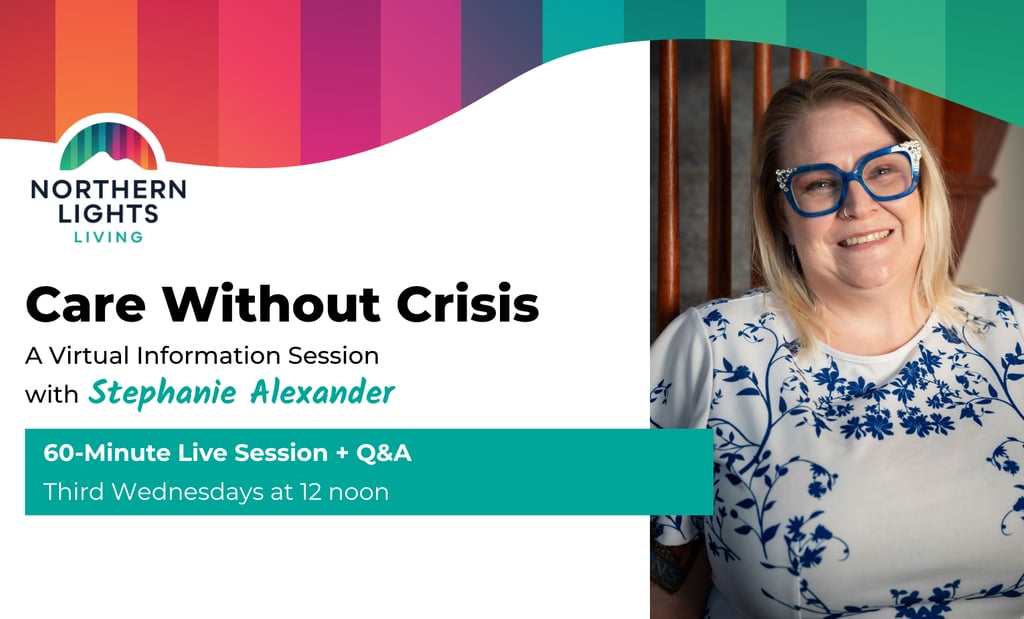
I host a free Care Without Crisis info session once a month on the third Wednesday at noon.
It is a supportive, practical space to learn how to spot early warning signs, talk about help, and build a plan before a crisis forces your hand.
If you are in the wait and see season right now, you are not alone. You do not need certainty to take a small step. You just need a plan that helps you breathe again.
Northern Lights Living
Illuminating the Way to Quality Care
© 2026. All rights reserved.
Connect on social