
Now Booking Private Pay Clients - All Others Coming Soon | Monthly Info Sessions and Q&A: Register Today!

Why Accepting Help Can Be Hard for Strong, Independent People
In-home support isn't giving up your independence. It's how strong-minded people protect their independence.
Stephanie Alexander, Founder Northern Lights Living
6/29/20264 min read
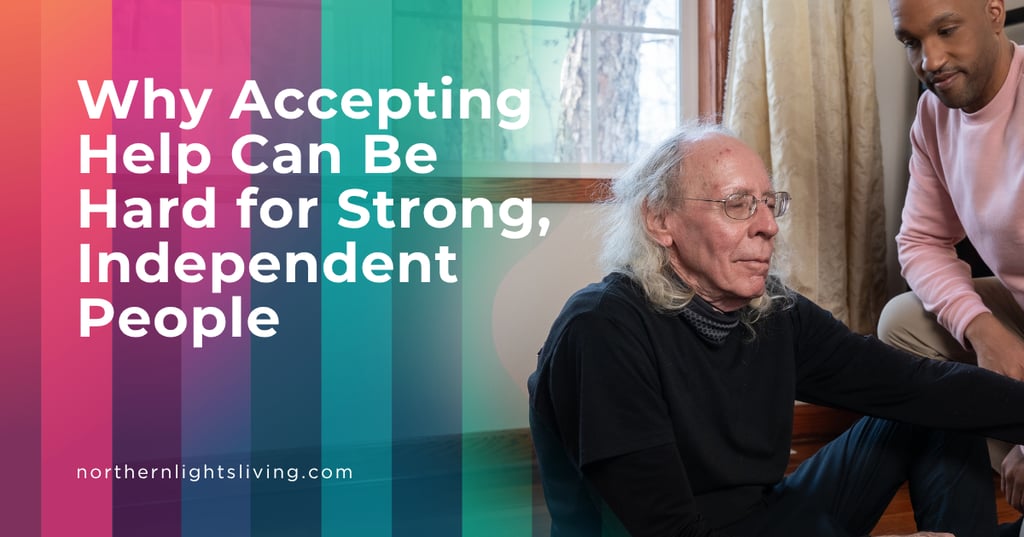
For people who have spent their whole lives being capable, self-reliant, and in control, accepting help can feel like admitting defeat.
And most of the time, it’s not about being stubborn or “difficult.” It’s about habit and a core sense of self that often goes back to early childhood and has had decades upon years to develop.
When the Person Who Always Helped Everyone Else Needs Support
If you are a strong, independent person you've probably spent your whole life being the one people count on.
The one who shows up. The one who fixes things. The one who never asked for help.
So when your body or your circumstances start asking you to accept support, it doesn't feel like a small adjustment. It feels like losing a piece of who you are.
What I want you to know is: that's not stubbornness. That's not someone being "difficult." That's a core sense of self rooted in childhood experiences that doesn't unwind just because someone hands you a brochure about in-home care.
This is one of the most common walls families hit when they start looking into support. The parent who has always been the strong one now feels vulnerable. The spouse who has always done the caregiving now needs to be cared for. And that shift goes beyond logistics. It can be very emotional.
Independence isn't just doing things yourself
Independence is autonomy. It's dignity. It's the freedom to live life on your own terms, in your own home, your own schedule, your own way.
So when someone has spent decades making their own decisions and running their own life, the idea of needing support can feel like losing control of the whole thing.
And underneath, there's fear:
Fear of being a burden.
Fear of losing privacy.
Fear that accepting a little support now means losing everything later.
Those fears aren't irrational. They come from a real, reasonable concern about what happens when life starts asking more of you than you can give on your own.
After 25 years of sitting on both sides of the table, as both a caregiver and a care coordinator for a family member, here’s what I want families to know: accepting support is not the same as giving up independence. When approached with compassion, support protects independence. It's often what keeps someone from getting pushed into something more restrictive later.
I'll tell you about an assessment I did in someone's home.
I walked in, introduced myself, and this woman looked me dead in the eye and said, blunt as anything:
"I don't want to be bossed around."
I didn't skip a beat.
"You're the boss," I said.
Because she is. This is her home. Her routine. Her life. Nobody gets to walk in and rearrange that, including me.
That's what it looks like to talk to strong, independent people the right way. Calm. Respectful. Direct. No power struggle. No persuasion games. Just steady leadership and real, actual choice handed back.
That kind of conversation isn't something you pick up overnight. I've been doing this work for 25 years, and every caregiver on our team is trained and coached to carry that same approach, out of respect for the relationship underneath all the checklists and task lists.
What support actually looks like, done well
In-home support is not about taking over. It's about stepping into the specific gaps so someone can keep doing what matters most to them.
That might look like:
Support with the tasks that have gotten difficult or unsafe: bathing, meal prep, getting up and down the stairs.
Companionship and structure that keeps isolation at bay and routines intact.
Reminders and rides so health stays steady and small problems don't turn into crises.
When it's done right, support creates breathing room. It quiets the low-grade alarm that's been running in the background. It frees up energy for the things that actually matter: relationships, the people you love, moments of peace instead of moments of survival.
Support is a tool, not a verdict on your strength
This is the reframe I want every family to sit with: accepting support is not a sign of failure. It's a tool.
The same way reading glasses are a tool. A ramp instead of stairs. A grab bar in the shower. A phone that keeps you connected to the people who love you.
Strong people use the resources in front of them so they can keep living fully. That's not weakness. That's wisdom and embracing the dignity of risk-taking.
Done right, in-home support lets someone stay in their own home, keep their own routines, make their own decisions, and hold onto their dignity while they do it.
That's not dependence.
That's independence, protected.
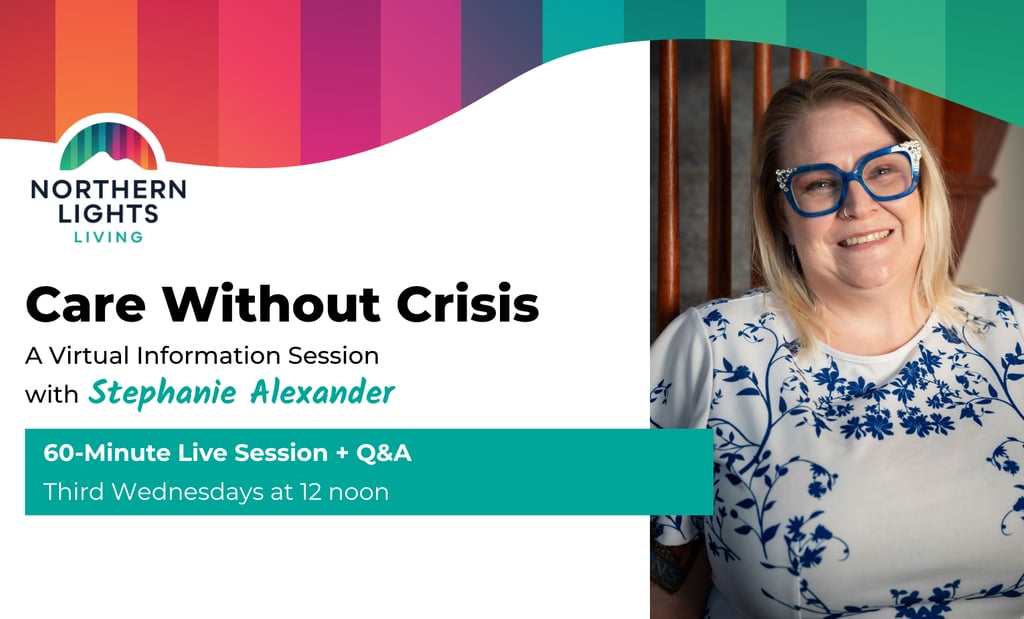
I host a free Care Without Crisis info session once a month on the third Wednesday at noon.
It is a supportive, practical space to learn how to spot early warning signs, talk about help, and build a plan before a crisis forces your hand.
If you are in the wait and see season right now, you are not alone. You do not need certainty to take a small step. You just need a plan that helps you breathe again.
Northern Lights Living
Illuminating the Way to Quality Care
© 2026. All rights reserved.
Connect on social