
Now Booking Private Pay Clients - All Others Coming Soon | Monthly Info Sessions and Q&A: Register Today!

What to Expect During the First Few Weeks of In-Home Care
Learn what to expect during the first weeks of professional in‑home care as families adjust and build trust.
5/25/20264 min read


Starting in-home care is a big step. And even when it’s the right step, it can come with a weird mix of emotions: relief, uncertainty, guilt, hope, and a whole lot of “Okay… what's next?”
The first few weeks are a transition period when routines are being learned, trust is being built, and everyone is adjusting to having someone new in the home on a regular basis. And yes, it can feel a little awkward at first. That doesn’t mean it’s the wrong choice, it just means we're all human.
Here’s what to expect, and what I want families to know going in.
The first visit: getting to know each other
The first visit is mostly introductions and observation.
The caregiver is learning:
the layout of the home
the person’s routine
preferences and boundaries
what helps and what doesn’t
what support would actually make the day easier
And the person receiving care is doing their own quiet assessment, too:
“Who is this person?”
“Do they listen?”
“Do they rush me?”
“Do they treat me like an adult?”
It’s normal for things to feel a little formal or tentative in the beginning. Trust does not happen in an instant. It builds when someone shows up consistently, respects the home, and does what they said they were going to do.
And I’ll say this, because it’s true:
The best time to start care is before you’re in crisis. The second-best time is now.
Starting early gives you room for the transition to unfold without the pressure of an emergency.
Building trust through consistency
In the first few weeks, consistency is everything.
When the same caregiver shows up at the expected time, follows through, and respects preferences, trust starts to take root. The home starts to feel steady again.
This is why continuity matters so much. When caregivers are constantly changing, the person receiving care has to re-orient over and over and over again. That’s exhausting both for them and for the whole family.
What families often notice is that after a few visits:
conversation flows more easily
routines start to feel comfortable
the person receiving care relaxes
the caregiver starts to anticipate what’s needed without being asked
Communication is key (and it goes both ways)
Clear, ongoing communication makes all the difference during this adjustment period.
Caregivers will ask questions, listen carefully, and adjust based on what they learn. Families should feel comfortable sharing preferences, concerns, or feedback. And the person receiving care should feel heard and respected in decisions about their own support. Always.
At Northern Lights Living, we provide regular family updates through text or video calls so everyone stays informed and connected. It's how we do things differently, because we believe care should feel supportive of the whole family relationship.
Nobody should feel like they’re in the dark, wondering what’s happening in their loved one’s day.
We’re here for you today, tomorrow, and a year from now.
We aren't here to create one-time transactional experiences, such as "tasks delivered per one hour of booked service." We're here to create an ongoing relationship built on respect and caregiver responsiveness.
Adjustments are normal (not a failure)
It is rare for everything about the care you receive to feel perfect from day one. Small adjustments are part of the process of getting to know each other.
In the first few weeks, these adjustments are common:
the timing needs to shift a little
a task needs to be approached differently
the person receiving care realizes they want more support in one area and less in another
the caregiver learns a better rhythm for the day
That is not a sign that care “isn’t working.” That’s the learning curve. A good provider welcomes feedback and makes changes without defensiveness.
What families can do to support the transition
Families play an important role in helping the first few weeks go smoothly. Here are a few ways to support the process:
Be patient. Give everyone time to adjust. Trust builds gradually.
Share helpful information. Routines, preferences, “please don’t do it that way,” all of it helps.
Communicate openly. If something isn’t working, say so. Good care improves with honest feedback.
Check in gently. Ask the person receiving care how they feel about the support. Their voice matters most.
Starting care is not about replacing family. It’s about supporting family, so your relationship can get some breathing room back and visits can become mom-and-kid time or dad-and-kid time again. Not shower time. Not chores time. Not crisis time.
Ultimately, we believe that care should protect the life someone wants to live. And that includes a transition period to regular in-home support that feels respectful, dignified, and rooted in trust.
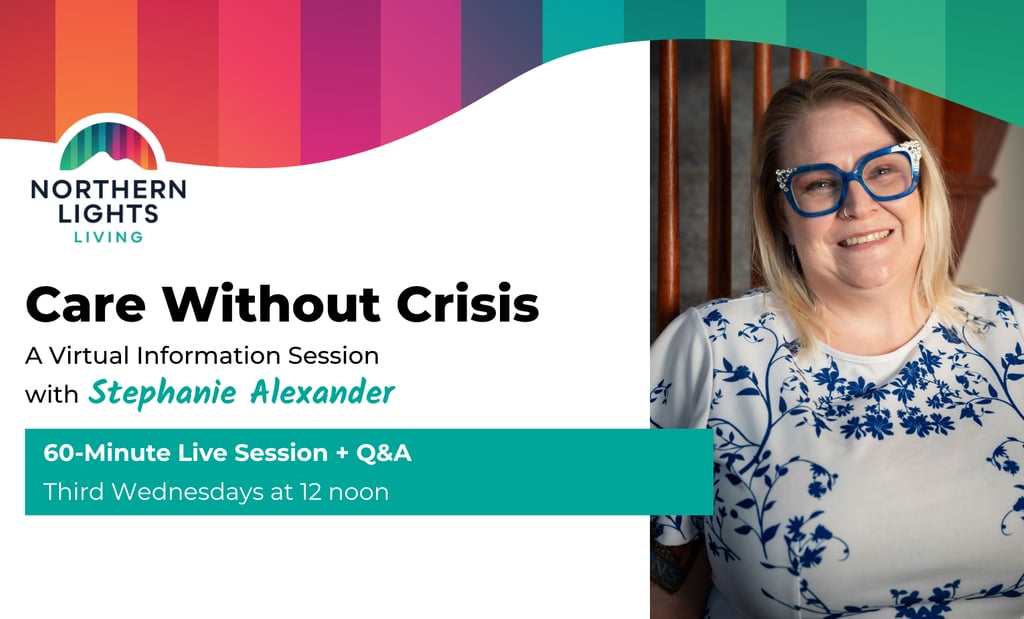
I host a free Care Without Crisis info session once a month on the third Wednesday at noon.
It is a supportive, practical space to learn how to spot early warning signs, talk about help, and build a plan before a crisis forces your hand.
If you are in the wait and see season right now, you are not alone. You do not need certainty to take a small step. You just need a plan that helps you breathe again.
Northern Lights Living
Illuminating the Way to Quality Care
© 2026. All rights reserved.
Connect on social