
Now Hiring a Direct Support Professional (In-Home Care) | Learn More & Apply

Getting Unstuck from the "Wait and See" Trap
Stephanie Alexander
3/22/20263 min read
If you are caring for a parent, partner, or relative, you might recognize this feeling.
Something feels off. Not a full blown crisis. Just enough that you are watching more closely.
Maybe it is missed phone calls. Maybe it is a bruise you cannot explain. Maybe the fridge looks emptier. Maybe the house feels more cluttered than usual. And yet it still feels hard to act.
A lot of families get stuck here. I call it the "wait and see" trap.
You are not ignoring the problem. You are waiting for certainty. You are waiting for the moment when you can say, “Now we know we need help.”
The hard truth is that the event you are waiting for is often something you do not actually want.
This post is here to help you get unstuck in a way that protects dignity, protects relationships, and protects your own nervous system.
STORY
Read through the following story and ask yourself: "Does this resonate with my experience?"
A spouse starts noticing small changes. Meals are skipped more often. Medications are harder to keep straight. There is more clutter. Not dangerous. Just… different. The spouse tries to keep things calm. They pick up the slack. They remind. They manage. They do not want to embarrass their partner. They do not want to make it a "thing."
Meanwhile, the adult child just sees snapshots. A phone call that feels shorter. A small bruise gets noticed. A home feels less orderly. The adult child thinks, “Maybe it is just a rough week.”
When the adult child brings it up, the spouse says, “It is fine, I have it handled.” Not because it is fine, but because it feels safer to hold it alone than to open a difficult conversation.
Then something happens. Not always a crisis. Sometimes it is just one more near-fall, one more missed refill, one more argument about driving.
And the adult child says, “We should do something.” And the spouse says, “I have been doing something.”
This is where resentment and panic can start
Not because anyone is bad.
But because everyone is tired, and everyone is working from different information.
The goal at this moment is not to force certainty. The goal is to create a safer baseline before the situation forces your hand.
What "Wait and See" Sounds Like
“Let’s just give it a little more time.”
“They are probably fine.”
“I do not want to overreact.”
“I do not want to start a fight.”
“What if we bring in help and they hate it?”
It can also show up as constant mental work. You are tracking medication. You are tracking meals. You are tracking mood. You are tracking falls. You are tracking whether the house feels safe.
Even if nobody says it out loud, someone is carrying a quiet vigilance. And that low-grade worry adds up.
A checklist to run through if you think this is you:
You replay the same question in your mind: “Is this bad enough yet?”
You keep telling yourself you will address it after this week.
You feel on edge even during calm moments.
You find yourself doing extra mental math: meds, meals, appointments, safety.
You avoid bringing it up because you dread the reaction.
You argue with siblings or your partner because you do not agree on what is real.
You notice you are compensating and nobody else sees it.
You are waiting for a dramatic event because subtle signs feel too easy to dismiss.
If you recognize several of these, you are not failing. You are likely trying to manage real risk without enough support.
Why Families Get Stuck Here
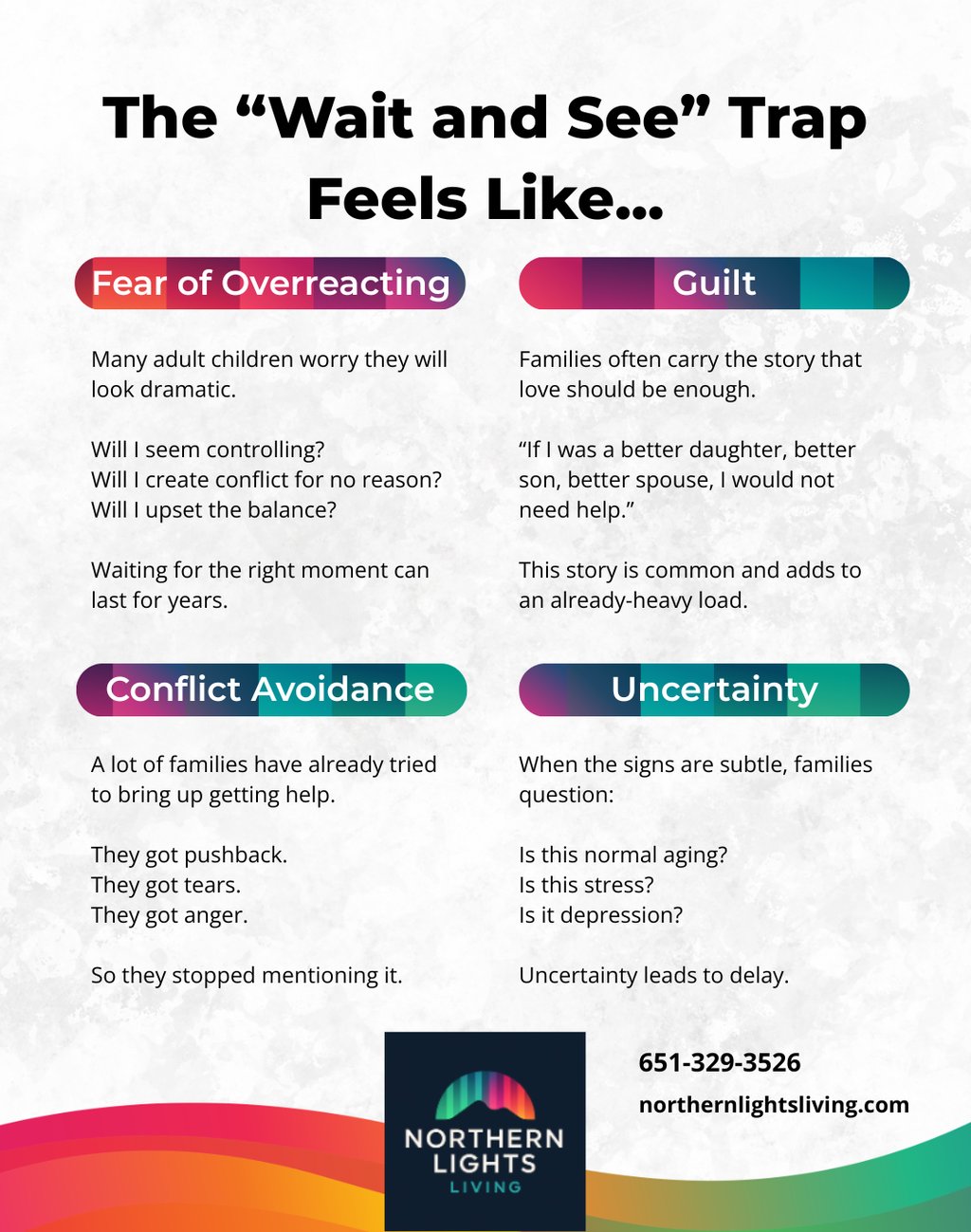
Most families are not avoiding help. They are trying to protect relationships and avoid making a mistake.
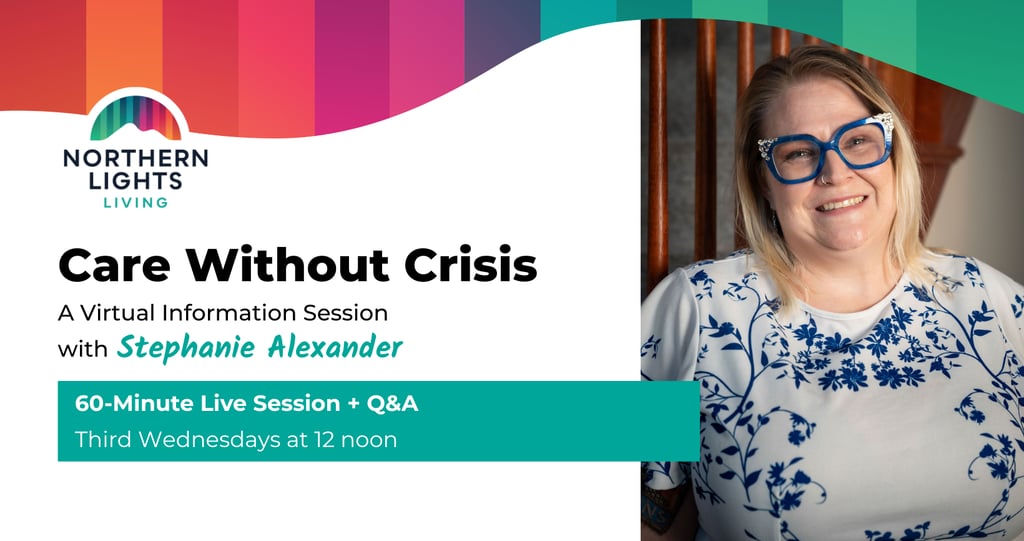
I host a free Care Without Crisis info session once a month on the third Wednesday at noon.
It is a supportive, practical space to learn how to spot early warning signs, talk about help, and build a plan before a crisis forces your hand.
If you are in the wait and see season right now, you are not alone. You do not need certainty to take a small step. You just need a plan that helps you breathe again.
Northern Lights Living
Illuminating the Way to Quality Care
© 2026. All rights reserved.
Connect on social