
Now Booking Private Pay Clients - All Others Coming Soon | Monthly Info Sessions and Q&A: Register Today!

The Question That Gets Families Unstuck (And How to Turn It Into a Plan)
When families are stuck in "wait and see" mode, I ask one question that changes the conversation: "What specific event are you waiting for?"
4/23/20264 min read
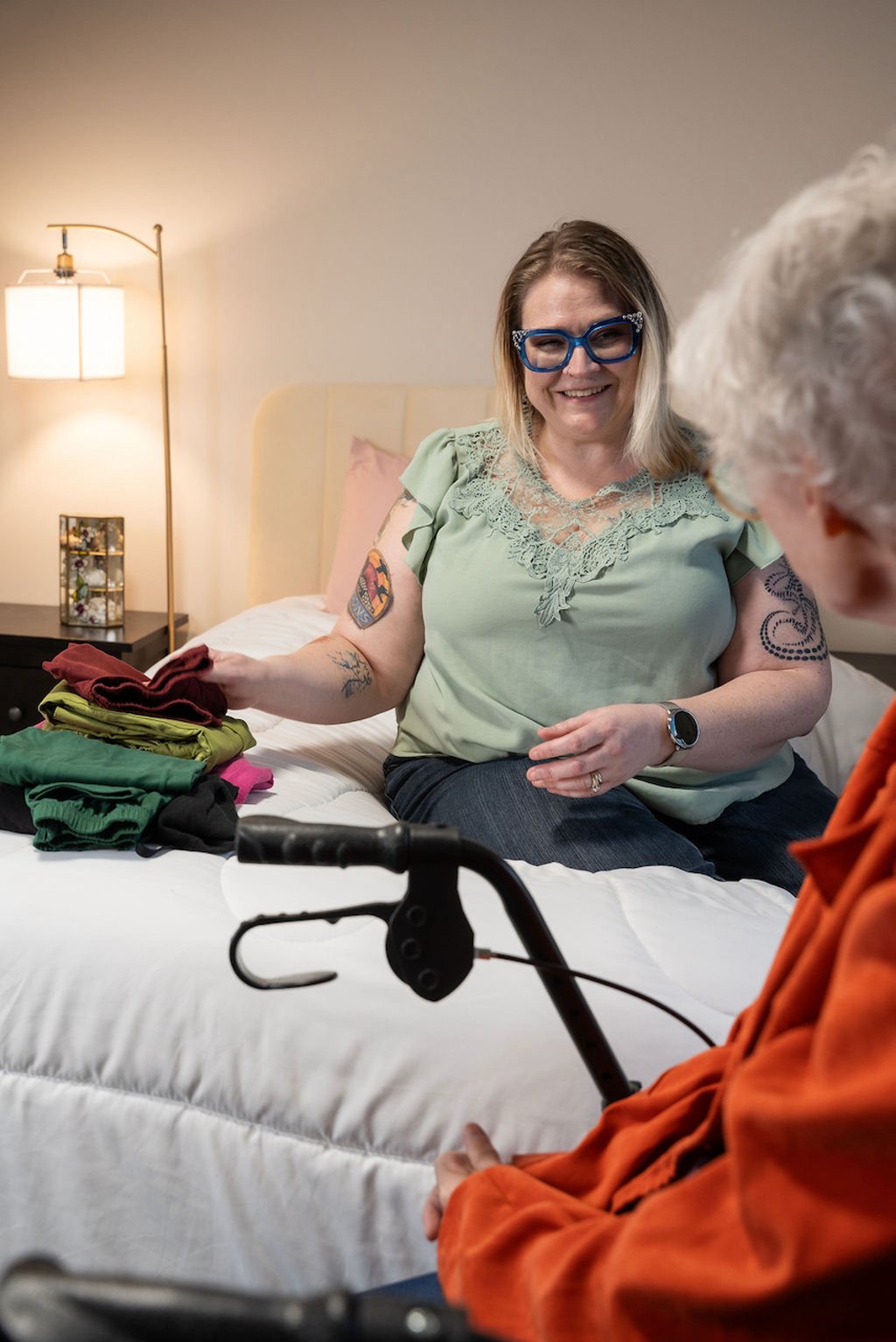
Families get stuck in “wait and see” mode all the time. It sounds reasonable. It sounds patient. It sounds like you’re not overreacting. But most of the time, “wait and see” is just another way of saying: We don’t know what to do next.
So when a family tells me they’re waiting, I ask one question that changes the whole conversation: “What specific event are you waiting for?”
Most people don’t have an answer. They’re just waiting for something to feel clearer. For someone else to say it out loud first. For proof they’re “not being dramatic.”
But clearer isn’t a plan. And without a plan, families often wait until the decision gets made for them. Usually in a crisis. Usually on someone else’s timeline.
Why this question works
This question does something simple but powerful: it turns vague worry into a decision you can actually prepare for.
It exposes the gap between: “I’ll know when I know” and “Here’s what I’m watching for, and here’s what we’ll do if it happens.”
When families can name the event they’re waiting for, we can plan for it.
And when you can’t name it, it might be because you're waiting for a feeling that may never come. Because caregiving is messy and rarely gives you a clean, obvious, decisive moment.
It gives you a slow drip of “something’s off,” and a nervous system that never fully shuts down.
Common answers to the "what are you waiting for" question (and how to turn them into a plan)
When families can answer the question, the answers usually sound like this:
1) Falls
“I’m waiting to see if they fall again.” I hear this come up so often, so if this is you, you're not alone!
If you’re waiting for a fall, ask yourself: How many falls are acceptable?
One? Two? What if the next one breaks a hip?
A better plan:
After one fall: do a quick home hazard check (lighting, rugs, clutter, stairs, bathroom setup).
After a second fall: bring in a professional for a safety assessment (OT/PT, home safety specialist, or a trusted care team member).
After a third fall (or one scary fall): start a baseline level of in-home support, even if it’s small.
Because the truth is: the “big” fall is rarely the first one.
2) Medication mistakes
“I’m waiting to see if they keep forgetting their medication." If you’re waiting for medication mistakes, ask: What kind of mistake are we talking about? Missed doses? Double doses? Mixing meds that shouldn’t mix?
A better plan:
After one missed dose: simplify the system (pill organizer, pharmacy blister packs, alarms).
After repeated mistakes: add a weekly med check-in (in-person or video, depending on distance).
If mistakes continue: add hands-on support for medication management.
This isn’t about controlling someone's life. It’s about avoiding a preventable crisis.
3) Driving incidents
“I’m waiting to see if they have another close call.” If you’re waiting on “one more close call,” define what that actually means. A fender bender? Getting lost? Running a red light? Hurting someone else?
A better plan:
After one close call: have a direct conversation about driving safety (not a vague hint, a real talk).
After a second incident: schedule an independent driving assessment.
If the assessment shows risk: make a transition plan before you’re trying to solve transportation in a panic.
That plan can be practical: rideshare setup, volunteer drivers, family schedules, delivery routines, or a private pay in-home support caregiver who takes care of a specific schedule each week. The goal is freedom, not punishment.
4) Hospitalization
“I’m waiting until they end up in the hospital.” If you’re waiting for a hospitalization, I want you to hear me: that’s already a crisis plan.
Hospitalization is disruptive. It’s expensive. It can cause rapid decline. And decisions made in a hospital are rarely calm or well-considered.
A better plan:
Before a hospitalization: build a baseline support plan (weekly check-ins, meal support, medication tracking, light housekeeping).
After a hospitalization: add transitional support during recovery (this is where families get crushed if they don’t plan).
If hospitalizations repeat: increase baseline care to prevent the next one.
The hidden cost of waiting
Families often assume waiting saves money or avoids disruption. Sometimes it does, for a short time.
But the cost shows up in other places:
Stress: The caregiver can’t fully relax. Even on quiet days, the brain is scanning for risk.
Safety risk: Small problems become big problems. What could’ve been addressed with a small adjustment becomes an urgent decision.
Relationship strain: Conversations get sharper when everyone’s tired. Siblings start to argue, partners start to resent, and the person receiving care can start to feel judged
Time and money: Crisis decisions get rushed, and rushed decisions rarely feel good. Last-minute solutions are almost always more expensive than a small, steady plan
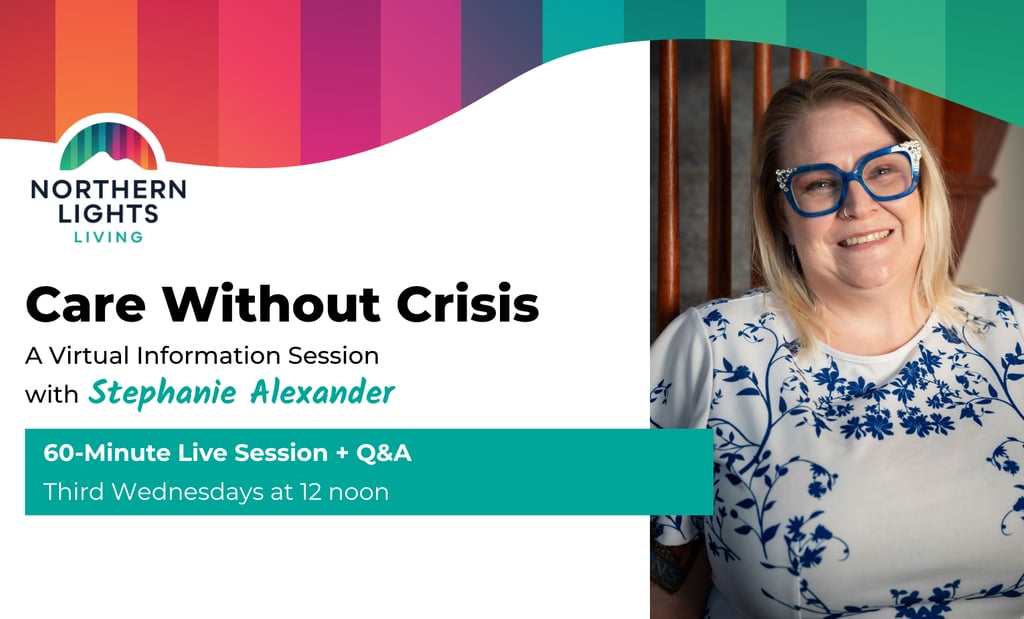
I host a free Care Without Crisis info session once a month on the third Wednesday at noon.
It is a supportive, practical space to learn how to spot early warning signs, talk about help, and build a plan before a crisis forces your hand.
If you are in the wait and see season right now, you are not alone. You do not need certainty to take a small step. You just need a plan that helps you breathe again.
Northern Lights Living
Illuminating the Way to Quality Care
© 2026. All rights reserved.
Connect on social