
Now Hiring a Direct Support Professional (In-Home Care) | Learn More & Apply

How much does in-home care cost?
Learn how in‑home care costs work, including hourly rates and sliding fee options, and how early planning helps families manage care.
6/1/20263 min read


Cost is one of the hardest questions to approach when it comes to in-home care. And it’s also the one that’s top of mind for most families.
A lot of families delay reaching out because they assume in-home care is financially out of reach. Others worry they’ll be locked into a long-term commitment they can’t sustain. Those concerns are real. But most of the time, they come from the fact that nobody has explained how it actually works in clear terms that everybody can understand and agree on. Without clarity, money worries take over.
At Northern Lights Living, we believe transparency matters. You should not have to navigate a maze of hidden fees or talk to an accountant just to understand what care will cost.
How in-home care costs are calculated
We have a standard hourly rate for in-home care services, with a 4 hour minimum. (And the minimum drops to just 2 hours if weekly support totals more than 10 hours.)
Your total cost depends on three main factors:
Number of hours per visit: Care can range from a few hours on occasion to all-day support.
Frequency of visits: Some families start with once or twice a week. Others need support in the home every day.
Type of support needed: Meal preparation, companionship, personal care, household tasks, transportation, and much more can all fall within the scope of in-home care.
They key takeaway? Care is flexible. You’re not locked into services you don’t need. Hours can increase, decrease, or pause based on what’s actually helpful.
The hidden costs of not having support
When families think about cost, they usually focus on the price tag alone. But there’s another side to this conversation:
What does it cost to not have support?
Because the “wait and see” approach has a cost, too. It often has a bigger impact than families expect. Consider:
Emergency hospital visits
Caregiver burnout
Delayed intervention
Missed meals leading to malnutrition
Falls that could have been prevented
Those costs show up financially, emotionally, and physically. And once a crisis happens, you don’t get to make calm choices rooted in logic anymore. You make fast choices based on expediency.
Let me give you a simple example.
Say a family invests $172 per week for four hours of care on just one day a week. In that time, a caregiver prepares seven dinners for the week, packages them with reheating instructions, and stores them safely.
Without that support, the person might skip meals because cooking feels overwhelming. Or they might spend $20 to $40 per meal eating out seven days a week. Over time, inadequate nutrition can lead to weight loss, weakness, and preventable hospitalizations.
So yes, $172 per week is an investment. But for many families, it’s a protective one helping to prevent bigger problems down the road.
How families can plan ahead
Planning ahead gives you options. It lets you budget thoughtfully and avoid crisis-driven decisions.
Here are a few steps that can help:
Start the conversation early. As I always say: “The best time to start care is before you’re in crisis. The second-best time is now.”
Identify where support would make the biggest difference. You do not have to solve everything at once. Starting with two or three key supports can create meaningful change.
Ask about flexible options. Care should adapt as needs change. Nothing should continue unless it’s truly helpful.
Explore sliding fee options if cost is a barrier. Many agencies, including Northern Lights Living, work with families to make care more accessible.
And most importantly: reaching out to ask questions does not mean you’re committing to anything. A care options conversation is simply a chance to gather information, explore what’s possible, and feel more grounded.
As I remind every family I speak with: “We’re here for you today, tomorrow, and a year from now.” There is no expiration date on reaching out, and no pressure to move forward before you’re ready. Call or text us at 651-329-3526.


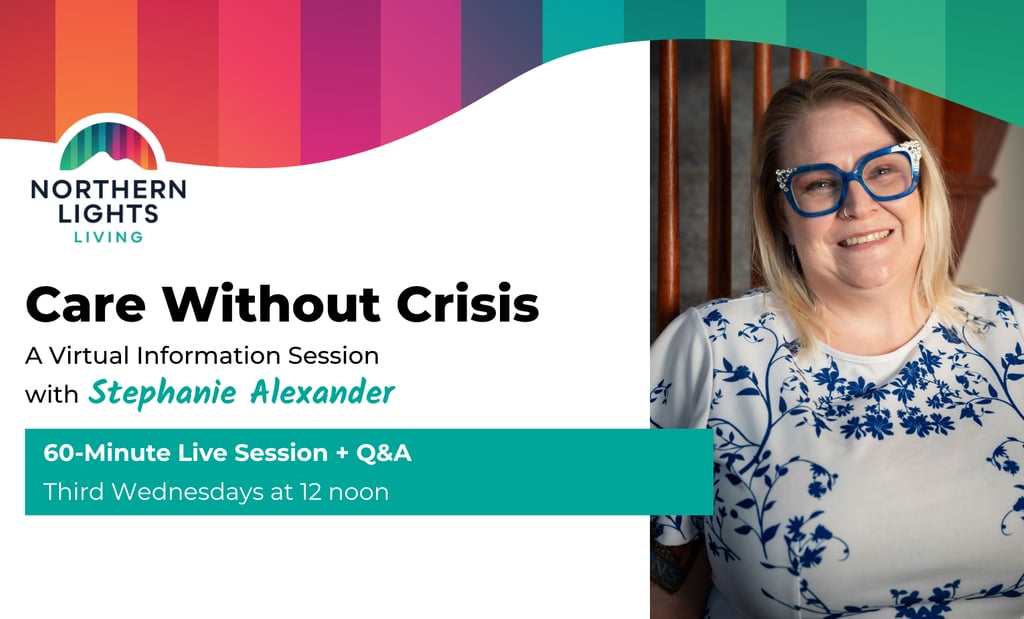
I host a free Care Without Crisis info session once a month on the third Wednesday at noon.
It is a supportive, practical space to learn how to spot early warning signs, talk about help, and build a plan before a crisis forces your hand.
If you are in the wait and see season right now, you are not alone. You do not need certainty to take a small step. You just need a plan that helps you breathe again.
Northern Lights Living
Illuminating the Way to Quality Care
© 2026. All rights reserved.
Connect on social