
Now Hiring a Direct Support Professional (In-Home Care) | Learn More & Apply

What Families Get Wrong About In‑Home Care
Common myths about in‑home care delay support. Learn what families get wrong and how home care truly supports independence and dignity.
FAMILY ASSISTANCE
Stephanie Alexander
2/3/20261 min read
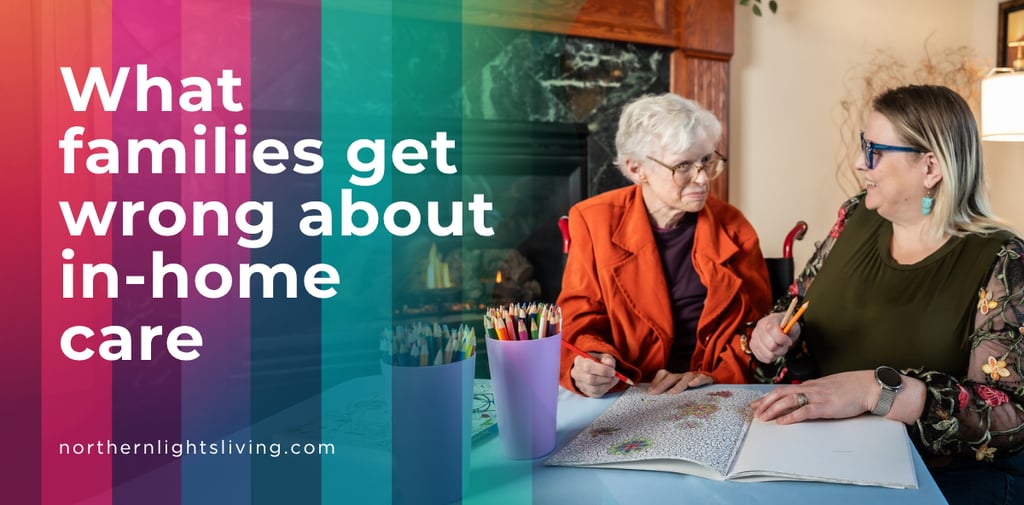
In-home care is one of those services people think they understand—until they need it.
Assumptions fill the gaps. They come from outdated ideas about aging, from fear and guilt, or from stories shared by well-meaning friends. These misunderstandings cause families to delay support, even when it could genuinely improve quality of life.
One of the most common beliefs: in-home care means losing independence. The opposite is true. In-home care protects independence by providing help only where it's needed. People stay in their own homes, keep their routines, and maintain control over their daily lives.
Another misconception: in-home care is only for people with medical needs. Non-medical in-home care focuses on everyday living: meal preparation, bathing, mobility support, light housekeeping, errands, and companionship. You don't need a diagnosis to benefit.
Some families worry that bringing in care means stepping away or being replaced. Care supports families rather than replacing them. When responsibilities are shared, relationships often improve because family members can focus on connecting instead of managing tasks.
There's also a belief that starting care means committing long-term. In-home care is flexible. Hours can change. Support can increase or decrease. Nothing is locked in unless it continues to meet a real need.
Understanding what in-home care truly is helps families move forward with clarity instead of fear.
Northern Lights Living
Illuminating the Way to Quality Care
© 2026. All rights reserved.
Connect on social