
Now Hiring a Direct Support Professional (In-Home Care) | Learn More & Apply

What Does In-Home Care Actually Look Like Day to Day?
What does in-home care look like day to day? Learn how home care services support independence, safety, and dignity through personalized daily care.
FAMILY ASSISTANCE
Stephanie Alexander
1/12/20262 min read
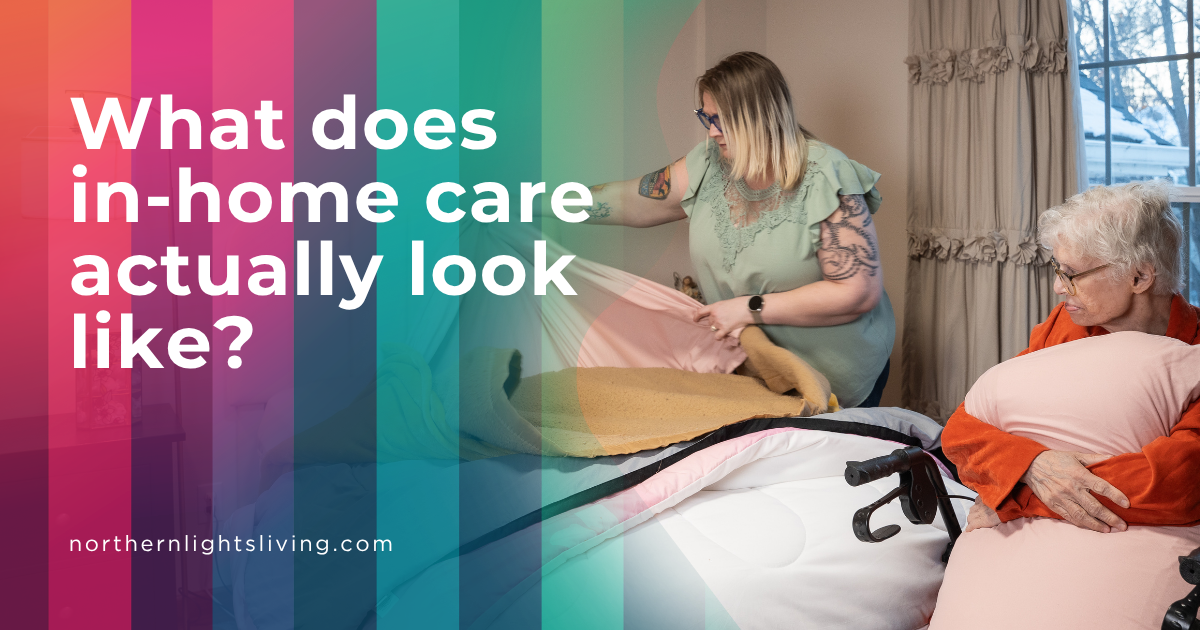
What Does In-Home Care Actually Look Like Day to Day?
When families first start thinking about in-home care, one of the biggest questions is also the simplest one.
What does this actually look like?
Not in theory. Not in a brochure. But day to day, in a real home, with a real person.
In-home care is not a one-size-fits-all service. It is flexible, personal, and designed to meet people where they are in their lives. Some individuals need very little help. Others need more hands-on support. Most fall somewhere in between, and those needs often change over time.
Here is what in-home care typically looks like in practice.
It Starts With the Individual, Not a Checklist
Every client begins with a conversation. We talk about routines, preferences, challenges, and goals. The goal is not to take over, but to support independence and safety while honoring how someone already lives.
Some clients want help in the morning. Others prefer support later in the day. Some value companionship more than physical assistance. All of that matters.
Care plans are built around the person, not the task list.
A Typical Visit Can Look Very Different From Client to Client
For some people, in-home care might include light household support. This can mean help with laundry, dishes, meal preparation, or keeping the home tidy and safe. It can also include reminders to eat, drink water, or take medications as prescribed.
For others, visits may focus on personal care. This can include help with bathing, dressing, grooming, or mobility support to reduce fall risk.
Many clients value companionship just as much as practical help. A caregiver might sit and chat over coffee, go for a short walk, play cards, or accompany someone to an appointment or errand. Loneliness is real, and meaningful connection is part of good care.
Care Evolves Over Time
One of the biggest benefits of in-home care is flexibility.
A client may start with just a few hours a week for light support. Over time, visits can increase or shift as needs change. This allows families to adjust gradually rather than waiting for a crisis that forces sudden decisions.
In-home care works best when it is proactive rather than reactive.
Families Are Supported Too
In-home care is not just about the client. It also supports family members who are often juggling caregiving with work, parenting, and their own health.
Having reliable support in place can reduce burnout, ease guilt, and give families peace of mind. It allows family relationships to focus more on connection and less on constant caretaking.
What In-Home Care Is Not
It is not about taking control away from someone.
It is not about rushing through tasks.
It is not about treating people like a diagnosis.
Good in-home care is respectful, collaborative, and centered on dignity.
Final Thoughts
If you are wondering what in-home care looks like day to day, the answer is simple and complex at the same time.
It looks like support that fits into real life.
It looks like flexibility.
It looks like meeting people where they are.
And most importantly, it looks different for everyone.
If you are starting to explore whether in-home care might be right for you or someone you love, having an honest conversation early can make all the difference.
Northern Lights Living
Illuminating the Way to Quality Care
© 2026. All rights reserved.
Connect on social