
Now Hiring a Direct Support Professional (In-Home Care) | Learn More & Apply

Understanding the Difference Between Medical Home Health and In‑Home Care
Confused about medical home health vs in‑home care? Learn the difference and how non‑medical care supports daily life.
FAMILY ASSISTANCE
Stephanie Alexander
2/10/20262 min read
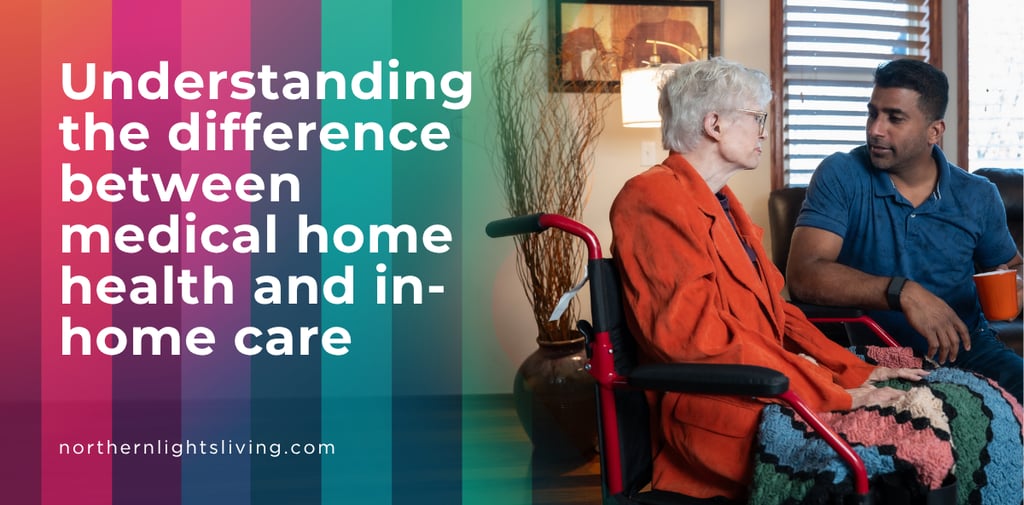
Many families explore "care at home" without realizing they're actually looking at two very different services. Here's a quick breakdown.
Medical Home Health: Short‑Term, Clinical Recovery
Medical home health is prescribed by a physician and focuses on medical recovery. It typically includes nursing visits, physical therapy, occupational therapy, or wound care following a hospitalization or surgery. These services are designed to help someone recover from a specific medical event.
The focus is clinical. The timeline is short‑term. Once recovery goals are met, medical home health ends.
In‑Home Care: Everyday Support That Adapts Over Time
In‑home care focuses on daily living. This includes assistance with meals, bathing, dressing, mobility, light housekeeping, errands, and companionship. No doctor's order is required, and care can continue as long as it remains helpful.
As someone who spent over a decade in disability services before founding Northern Lights Living, I saw firsthand how person‑centered support changes lives. "People thrive when support is built around their routines, preferences, and goals - not around what's easiest for staff," I often say. That same principle applies to in‑home care for older adults.
Some Families Use Both
Some families use medical home health first and then transition to in‑home care once skilled services end. Others start with in‑home care early to prevent issues from escalating in the first place.
Understanding the difference allows families to seek the right support at the right time rather than waiting for a diagnosis or crisis.
One of my core beliefs is that "care should support the life someone wants to live." That starts with knowing what type of support actually fits the situation.
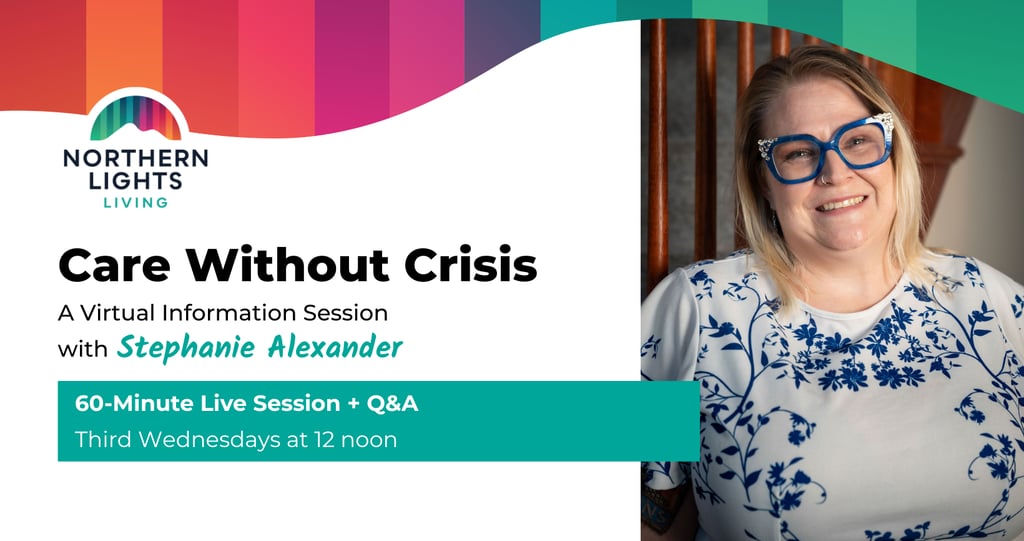
Ready to learn more? I host a free Care Without Crisis info session once a month on the third Wednesday at noon. It is a supportive, practical space to learn how to spot early warning signs, talk about help, and build a plan before a crisis forces your hand.
Northern Lights Living
Illuminating the Way to Quality Care
© 2026. All rights reserved.
Connect on social