Now Booking Private Pay Clients - All Others Coming Soon | Register for a FREE Virtual Community Session

The caregiving “wait and see” trap (and a better question)
Stuck in caregiving “wait and see”? Learn the key question that helps families name the real risk, plan ahead, and take a small step before a crisis.
FAMILY ASSISTANCE
Stephanie Alexander
3/22/20269 min read
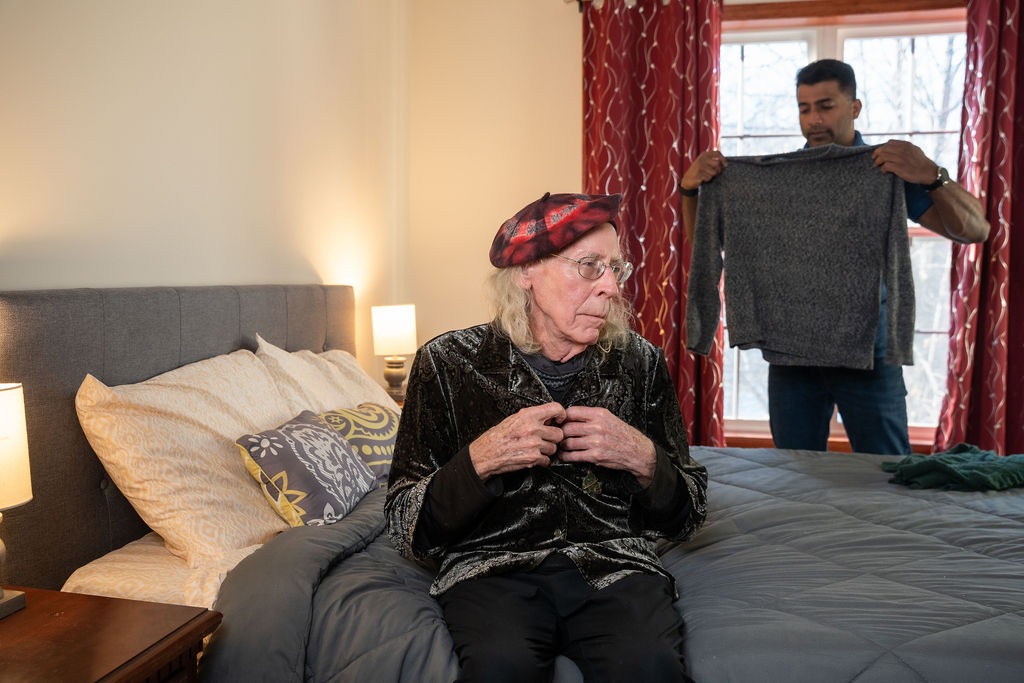
If you are caring for a parent, partner, or relative, you might recognize this season.
Something feels different. Not a full crisis. Just enough that you are watching more closely. Maybe it is missed phone calls. Maybe it is a bruise you cannot explain. Maybe the fridge looks emptier. Maybe the house feels more cluttered than usual. And yet it still feels hard to act.
A lot of families get stuck here. I call it the wait and see trap. You are not ignoring the problem. You are waiting for certainty. You are waiting for the moment when you can say, “Now we know we need help.”
The hard truth is that the event you are waiting for is often something you do not actually want. This post is here to help you get unstuck in a way that protects dignity, protects relationships, and protects your own nervous system.
IF YOU ARE THE ADULT CHILD, OR THE SPOUSE
Two people can live in the same story and experience it completely differently.
If you are the adult child: You might only see pieces. A missed call. A strange bruise. A comment that feels a little off. A visit where the kitchen looks different than it used to. And then you go back to your own life and wonder if you imagined it. You worry about overreacting. You worry about causing conflict. You worry about becoming the bad guy.
If you are the spouse: You might see everything. The small changes across the day. The repeated questions. The slower routines. The way you are quietly compensating. You might also be exhausted. And scared. And lonely. You might feel guilty for wanting help.
Different roles. Same trap. Waiting for certainty.
A QUICK COMPOSITE STORY (BECAUSE THIS IS HOW IT USUALLY LOOKS)
A spouse starts noticing small changes. Meals are skipped more often. Medications are harder to keep straight. There is more clutter. Not dangerous. Just… different. The spouse tries to keep things calm. They pick up the slack. They remind. They manage. They do not want to embarrass their partner. They do not want to make it a thing.
Meanwhile, the adult child sees snapshots. A phone call that feels shorter. A small bruise. A home that feels less orderly. The adult child thinks, “Maybe it is just a rough week.” When the adult child brings it up, the spouse says, “It is fine, I have it handled.” Not because it is fine. Because it feels safer to hold it alone than to open a difficult conversation.
Then something happens. Not always a crisis. Sometimes it is just one more near fall, one more missed refill, one more argument about driving.
And the adult child says, “We should do something.” And the spouse says, “I have been doing something.”
This is where resentment and panic can start. Not because anyone is bad. Because everyone is tired, and everyone is working from different information.
The goal is not to force certainty. The goal is to create a safer baseline before the situation forces your hand.
WHAT THE WAIT AND SEE TRAP LOOKS LIKE
It often sounds like:
- “Let’s just give it a little more time.”
- “They are probably fine.”
- “I do not want to overreact.”
- “I do not want to start a fight.”
- “What if we bring in help and they hate it?”
It can also show up as constant mental work. You are tracking medication. You are tracking meals. You are tracking mood. You are tracking falls. You are tracking whether the house feels safe.
Even if nobody says it out loud, someone is carrying a quiet vigilance. And that low-grade worry adds up.
A QUICK CHECKLIST: SIGNS YOU MAY BE IN “WAIT AND SEE”
If you recognize several of these, you are not failing. You are likely trying to manage real risk without enough support.
- You replay the same question in your mind: “Is this bad enough yet?”
- You keep telling yourself you will address it after this week.
- You feel on edge even during calm moments.
- You find yourself doing extra mental math: meds, meals, appointments, safety.
- You avoid bringing it up because you dread the reaction.
- You argue with siblings or your partner because you do not agree on what is real.
- You notice you are compensating and nobody else sees it.
- You are waiting for a dramatic event because subtle signs feel too easy to dismiss.
WHY FAMILIES GET STUCK HERE
Most families are not avoiding help. They are trying to protect relationships and avoid making a mistake.
Fear of overreacting
Many adult children worry they will look dramatic.
Or they worry they will create conflict for no reason.
Conflict avoidance
A lot of caregivers have already tried to bring up help.
They got pushback.
They got tears.
They got anger.
So they stop.
Not because they stopped caring, but because they are tired.
Uncertainty
When the signs are subtle, families question themselves.
Is this normal aging?
Is this stress?
Is it depression?
Is it early dementia?
Is it medication?
Uncertainty creates delay.
Guilt
Caregivers often carry a painful story that love should be enough.
If I loved them better, I would handle this.
If I was a better daughter, better son, better spouse, I would not need help.
That story is common.
It is also not sustainable.
Misconceptions about care
Many people believe that starting help means the end of independence.
In real life, early, respectful support often protects independence longer.
THE QUESTION I ASK FAMILIES (AND HOW TO USE IT)
If you feel stuck, start here: What specific event am I waiting for?
Common answers are:
- a fall - a medication mistake
- a scary driving incident
- a hospitalization
- a moment of confusion that cannot be explained away
- a bigger mess or more clutter
- more suffering When you name the event, you can plan for it.
And planning early usually protects independence better than reacting late. Turn your answer into a plan When you name the event, you also name:
1) what you can do now
2) what you will do if the event happens
Examples:
If you are waiting for a fall:
- Now: do a one-week baseline (falls or near falls, footwear, lighting, clutter, dizziness).
- Now: try a small support window once a week focused on safety and home setup.
- If it happens: you already know who to call, what help to add, and how to talk about it.
If you are waiting for a medication mistake:
- Now: get a clear med list and a refill system.
- Now: choose one person to own med organization.
- If it happens: increase oversight in a way that preserves dignity (a weekly review, blister packs, or a nurse check).
If you are waiting for a scary driving incident:
- Now: agree on what counts as a driving red flag.
- Now: start building alternatives (rides, delivery, one weekly outing with someone else).
- If it happens: you are not improvising in panic.
If you are waiting for a hospitalization:
- Now: build a short emergency readiness list (meds, contacts, diagnoses, POA documents).
- Now: identify who will coordinate decisions.
- If it happens: the family is aligned enough to act quickly.
This is not about controlling the future. It is about reducing surprises.
THE HIDDEN COST OF WAITING
Families often assume waiting saves money or avoids disruption. Sometimes it does for a short time. But the cost often shows up in other ways.
Stress
The caregiver cannot fully relax.
Even during quiet moments, the mind is scanning for risk.
Safety risk
Small problems become bigger problems.
What could have been addressed with a small adjustment becomes an urgent decision.
Relationship strain
When everyone is tired, conversations get sharper.
Siblings can start to argue.
Partners can start to resent.
The person receiving care can feel judged.
Time
Crisis decisions get rushed.
Rushed decisions rarely feel good.
Money
Last-minute solutions are often more expensive than a small, steady plan.
A 3-STEP RESET IF YOU FEEL STUCK
You do not need a perfect plan. You need a safer baseline.
1) Name the risk. What are you worried about, specifically?
2) Name the support that would reduce the risk. Support does not have to be all or nothing.
3) Start smaller than you think. The smallest helpful step is often the best first step.
Examples:
- If the risk is “They are skipping meals,” a support step could be one grocery run together, one meal prep session, or a twice-weekly meal check-in.
- If the risk is “Meds are confusing,” a support step could be a weekly pill organizer, a pharmacy pack, or a refill reminder system.
- If the risk is “The house is slipping,” a support step could be one weekly reset visit for laundry, dishes, trash, and safety walk-through.
- If the risk is “I cannot relax because I am always watching,” the support step might be respite for you, not more willpower.
If you do only one thing after reading this post, do this. Name the risk. Name a small support that would reduce it. Then set a two-week trial.
THREE EARLY STEPS THAT DO NOT TAKE AWAY INDEPENDENCE
If the idea of starting care feels huge, start smaller. The goal is not to take control. The goal is to create a safer baseline.
Step 1: Build a weekly check-in (10 minutes) Pick one day each week. Keep it short. Keep it consistent. Use the same simple agenda:
- Safety: any falls or near falls?
- Meds: any missed doses or refills?
- Meals: are they eating well enough?
- Mood: loneliness, irritability, confusion?
- Next step: one small action for the week
Write it down in one shared place so family members are not chasing updates through 20 text threads. If you are long-distance, this matters even more. A weekly check-in reduces surprises.
Step 2: Start with a small support window Many families do not need full-time care to start. A small support window once or twice a week can:
- reset the home (laundry, dishes, tidying)
- support nutrition (meal prep, groceries)
- reduce loneliness
- give the caregiver real relief
Starting small builds trust. It gives everyone data. It also reduces defensiveness because it feels like support, not takeover.
Step 3: Set a safety baseline for one week If you cannot name what is wrong yet, track a few basics for one week:
- meals and hydration
- medications
- sleep
- falls or near falls
- mood or confusion
Patterns show up quickly when you write them down. A baseline also helps you walk into conversations with clarity. Instead of “I am worried,” you can say, “I noticed three missed meals this week,” or “I noticed refills were late twice,” or “I noticed two near falls.”
WHAT TO DO FIRST (DEPENDING ON WHAT IS MOST URGENT)
Sometimes wait and see persists because the first step is unclear. Here are three common starting points. If safety risk feels immediate If there are falls, wandering, stove concerns, or serious confusion, start with the safest baseline. You can be respectful and still be decisive.
- Reduce obvious hazards (lighting, trip risks, clutter pathways).
- Make sure medication and emergency contacts are organized.
- Add a small support visit focused on safety and routines.
If the changes are subtle but persistent This is where most families get stuck. Start with data and a trial.
- Baseline for one week.
- One small support window for two weeks.
- Review together.
If the biggest risk is caregiver burnout If you are the spouse, or the adult child carrying the mental load, your nervous system is part of the care plan. If the plan depends on you never getting tired, it is not a plan. Start with one predictable layer of relief. One consistent support window a week. One shared note. One check-in that is not chaos.
A CONVERSATION SCRIPT THAT KEEPS DIGNITY INTACT
If you are worried about how your parent or partner will react, try: “I love you, and I want you to stay in control of your life. I am noticing a few changes, and I am feeling more worried. I want to try a small amount of support so things feel easier, not harder. We can start small and adjust together.”
Reminders:
- The first conversation is not the last conversation.
- Respect matters more than the perfect wording.
- Trials reduce pressure.
A script for adult children talking with a spouse caregiver “I can tell you have been holding a lot. I do not want to swoop in and criticize. I want us to build a plan that gives you real support. Can we pick one small change to try for two weeks and then review?”
WHAT TO DO IF SIBLINGS DISAGREE
Start with the shared goal: “We all want safety and dignity.” Then agree on a short trial: “Let’s try one small support change for two weeks and review.” Arguing about the whole future creates paralysis. A trial creates motion.
IF YOU ARE NOT SURE WHAT TO DO NEXT
Ask yourself:
What would better look like in 30 days?
Better might be:
- fewer scares
- better sleep
- fewer arguments
- more connection and less task-list time
- a calmer plan that does not depend on one person doing everything
If you can define better, it becomes easier to build a plan.
A FEW COMMON QUESTIONS I HEAR
“What if I am wrong?” It is okay to be wrong. A respectful support plan can be adjusted. The bigger risk is staying stuck until the only options feel urgent. If you are unsure, start with baseline tracking and a short trial. “What if my parent or partner gets mad?” Anger is common. It usually comes from fear and loss of control. Stay calm, repeat the goal, and keep the step small. “I hear you. I am not trying to take over. I want to try one small support step for two weeks and then review.” “What if my siblings will not agree?” You do not need perfect agreement to reduce risk. You need a shared goal and a small trial. A shared note helps everyone work from the same information.
JOIN THE NEXT CARE WITHOUT CRISIS SESSION
I host a free Care Without Crisis info session once a month on the third Wednesday at noon. It is a supportive, practical space to learn how to spot early warning signs, talk about help, and build a plan before a crisis forces your hand. If you are in the wait and see season right now, you are not alone. You do not need certainty to take a small step. You just need a plan that helps you breathe again.
Northern Lights Living
Illuminating the Way to Quality Care
© 2026. All rights reserved.
Connect on social
Are you a caregiver seeking employment?Explore careers